
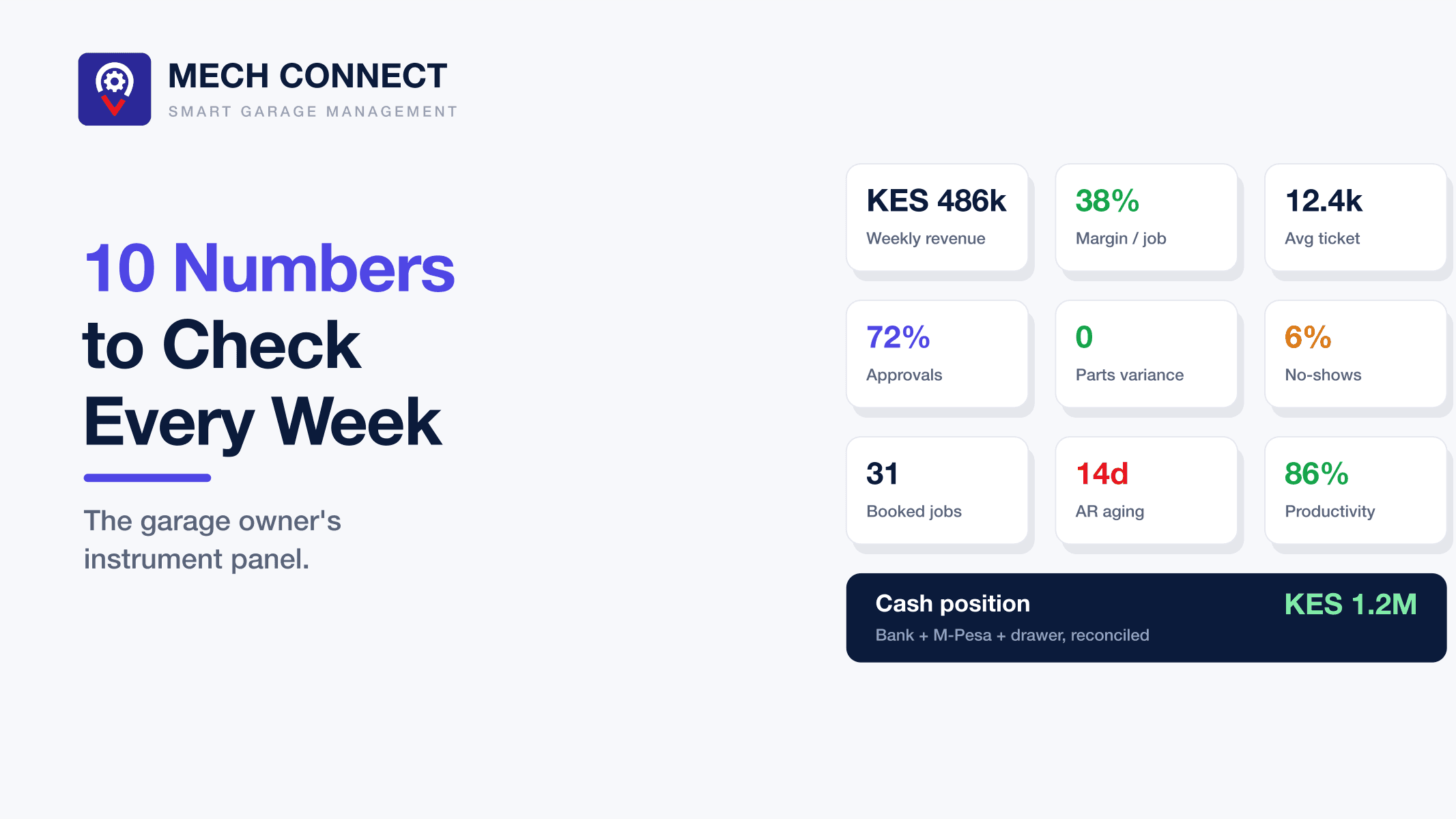
Ask a garage owner how business is going and you get a feeling: "busy", "slow", "picking up". Feelings are how garages get surprised, by a profitable-looking month that lost money, by a technician everyone rated on volume of noise, by a cash crunch that was visible six weeks earlier to anyone counting.
Ten numbers, checked weekly, replace the feelings. None takes more than a glance if your system generates it; together they are the instrument panel of the business.
The money four
1. Revenue, this week vs your baseline. The obvious one, useful mainly for spotting trend, three soft weeks is a pattern, not luck.
2. Profit per job. The number that separates busy from profitable. Parts cost, labour time, and discounts per job card reveal which services earn and which quietly subsidize customers, the blindness described in how garages lose money.
3. Average ticket. Total revenue over jobs completed. It rises when inspections surface legitimate work and estimates convert it; it stagnates when the garage only fixes what the customer mentioned. One owner told us reporting alone lifted their average ticket 35% in three months.
4. Cash position and receivables aging. What is in the bank and M-Pesa, and who owes what for how long, the two numbers from the cashflow guide that keep Fridays boring.
The pipeline three
5. Estimate approval rate. Approved estimates over estimates sent. The most improvable revenue number in the building; photos, itemization, and follow-ups move it visibly within weeks, as covered in the estimates guide.
6. Booked jobs for next week. Your forward revenue. A thin book on Thursday is a reason to send a service-reminder campaign on Friday, not a surprise the following Wednesday.
7. No-show rate. Bookings that never arrived. Above roughly one in ten, your reminder flow needs attention, automated reminders routinely cut no-shows by two-thirds.
The operations three
8. Parts variance: used vs billed. Parts issued against parts invoiced. The gap is pure leak, shrinkage or forgetfulness, and the target is zero. Anything else names a process failure with a shilling value.
9. Jobs in progress and their stage age. How many vehicles are in the building, and what has been stuck in a stage too long. The workshop board makes this a ten-second scan; a card aging in "awaiting approval" is revenue waiting for one phone call.
10. Technician productivity. Billable output per technician against hours present, from job-card data, not impressions. It protects your quiet high performer and names the training gap, fairly, as the technician guide argues.
The habit that makes them work
Numbers change nothing by being known; they change things by being reviewed on a rhythm. The working pattern: one fixed hour weekly, same day, owner and whoever runs the floor, ten numbers on one screen, and one decision per number that is off, chase the aging receivable, follow up the stalled estimates, fix the variance process, fill next week's book. Fifteen minutes of looking, and the garage stops being surprised.
The practical requirement is that the numbers must exist without an evening of spreadsheet archaeology, which is the real argument for running the workflow through one system. Every KPI above is a standing report in Mech Connect, generated by the job cards, inventory, and invoices your team already touches. See the reporting →, or book a demo and we will build your ten-number dashboard live.
Ready to run a smarter garage?
See how Mech Connect puts these principles into practice for 150+ garages worldwide.